
Material Safety Data Sheet
Epoxy powder coating
Complies with Regulation (EU) No 1907/2006 (Registration, Evaluation and Authorization of Chemicals), Annex II as amended by Regulation (EU) No 2020/878
Intercoat 460
Version 1Issue date/revision date: 01.11.2024Date of previous issue: 01.11.2024
Download PDFSection 1: Identification of the substance / mixture and of the company / undertaking
1.1. Product identifier
- Trade name
- Intercoat 460
- Product description
- Paint
- Product type
- Epoxy powder coating
1.2. Relevant identified uses of the substance or mixture and uses advised against
- Identified uses
- This material features good anti-corrosion properties. It is used as a primer for painting metal surfaces pre-treated with spray cleaning, when the item to be painted is exposed to a severe corrosion load.
1.3. Details of the supplier of the safety data sheet
- Intercoat OÜphone + 372 655 1010Kadastiku 29A,21004 Narva,Estonia
- Regional Representative
- Kościuszki 10 lok. 105-500 Piaseczno,Poland+48 222 66 2338
- Dept. responsible for information
- info@intercoat.ee
- Telephone number
- + 372 655 1010
1.4 Emergency telephone number
In an emergency, call 112
Section 2: Hazards identification
Classification according to EC regulation 1272/2008 (CLP)
2.1. Classification of the substance or mixture
- Product definition
- Mixture.
The product is not classified as hazardous according to Regulation (EC) 1272/2008 as amended.
See Section 16 for the full text of the H statements declared above.
See Section 11 for more detailed information on health effects and symptoms.
2.2. Label elements
- Signal word
- “Warning” sign on the box

- Hazard statements
- No known significant effects or critical hazards
Precautionary statements
- General
- Not applicable
- Prevention
- P261 – Avoid breathing dust
- Response
- Not applicable
- Storage
- P.7.1
- Disposal
- P.13
- Supplemental label elements
- For professional use only. May produce an allergic reaction.
2.3. Other hazards
- Other hazards which do not result in classification
- None known.
Section 3: Composition / information on ingredients
- 3.2 Mixtures
- Mixture.
| Product/ingredient name | Identifiers | % | Regulation (EC) No.1272/2008 [CLP] | Type |
|---|---|---|---|---|
| 4,4'- (1- methylethylidene) bis-, polymer with 2,2'- [(1-methylethylidene) bis (4,1 phenyleneoxymethylene)] bis [oxirane] | EC №.: not applicable (polymer)CAS no.: 25036-25-3 | 45 | Not classified | |
| Titanium dioxide | REACH No.: 01-2119489379-17EC №: 236-675-5CAS no: 13463-67-7 | 0-5 | Not classified | |
| 4,4'-isopropylidenediphenol | REACH No.: 01-2119457856-XXXXEC №.: 201-245-8CAS no.: 80-05-7 | 4-10 | Not classified | |
Zinc powder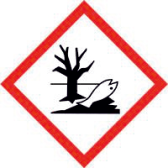 | EC №.: 231-175-3CAS no.: 7440-66-6 | 10-39 | Aquatic Acute 1 H400Aquatic Chronic 1 H410 | |
| 2-hydroxy-1,2-diphenylethan-1-one | EC №: 204-331-3CAS no.: 119-53-9 | 0,3 | Not classified |
There are no additional ingredients present which, within the current knowledge of the supplier and in the concentrations applicable, are classified as hazardous to health or the environment, are PBTs, vPvBs or Substances of equivalent concern, or have been assigned a workplace exposure limit and hence require reporting in this section.
Type
[1] Substance classified with a health or environmental hazard
[2] Substance with a workplace exposure limit
[3] Substance meets the criteria for PBT according to Regulation (EC) No. 1907/2006, Annex XIII
[4] Substance meets the criteria for vPvB according to Regulation (EC) No. 1907/2006, Annex XIII
[5] Substance of equivalent concern
[6] Additional disclosure due to company policy
[*] The classification as a carcinogen by inhalation applies only to mixtures placed on the market in powder form containing 1% or more of titanium dioxide particles with diameter ≤ 10 μm not bound within
Occupational exposure limits, if available, are listed in Section 8.
Section 4: First aid measures
4.1. Description of first aid measures
- General information
- First aider: pay attention to self-protection! In case of any accident move the victim out of danger zone. Do not leave affected person unattended. Seek medical attention if necessary.
- Inhalation
- In case of accident by inhalation: remove casualty to fresh air, take the dirty clothes off and keep at rest. If you feel unwell, seek medical advice.
- Skin contact
- Thoroughly wash skin with soap and water. Do not use solvents or thinners. Remove contaminated clothing.
- Eye contact
- If product gets into the eye, keep eyelid open and rinse immediately with large quantities of water, for at least 10 minutes. Remove contact lenses, if any. In case of troubles or persistent symptoms, consult an ophthalmologist.
- Ingestion
- Have victim repeatedly drink large amounts of water with activated charcoal. Do not induce vomiting. No administration in cases of unconsciousness or cramps. Rinse mouth immediately and drink plenty of water. Observe risk of aspiration if vomiting occurs. Get medical advice/attention.
4.2. Most important symptoms and effects, both acute and delayed
Over-exposure signs/symptoms
- Eye contact
- No specific data.
- Inhalation
- No specific data.
- Skin contact
- No specific data.
- Ingestion
- No specific data.
4.3. Indication of any immediate medical attention and special treatment needed
- Information to physician
- In case of inhalation of decomposition products in a fire, symptoms may be delayed. The exposed person may need to be kept under medical surveillance for 48 hours.
- Specific treatments
- No specific treatment.
Section 5: Firefighting measures
5.1. Extinguishing media
- Suitable extinguishing media
- In case of fire: Use water spray, dry powder, foam or carbon dioxide for extinction.
- Extinguishing media which must not be used for safety reasons
- Strong water jet and carbon dioxide gases under pressure.
5.2. Special hazards arising from the substance or mixture
- Special protective equipment for firefighters
- Exposure to fire produces thick, black smoke that is hazardous to health. Do not breathe smoke.
5.3. Advice for firefighters
- Special exposure hazards arising from the substance itself, combustion products, resulting gases
- Promptly isolate the scene by removing all persons from the vicinity of the incident if there is a fire. No action shall be taken involving any personal risk or without suitable training.
- Special protective equipment for fire-fighters
- Fire-fighters should wear appropriate protective equipment and self-contained breathing apparatus (SCBA) with a full face-piece operated in positive pressure mode. Clothing for fire-fighters (including helmets, protective boots and gloves) conforming to European standard EN 469 will provide a basic level of protection for chemical incidents
Section 6: Accidental release measures
6.1. Personal precautions, protective equipment and emergency procedures
- For non-emergency personnel
- No action shall be taken involving any personal risk or without suitable training. Evacuate surrounding areas. Keep unnecessary and unprotected personnel from entering. Do not touch or walk through spilt material. Put on appropriate personal protective equipment.
- For emergency responders
- If specialized clothing is required to deal with the spillage, take note of any information in Section 8 on suitable and unsuitable materials. See also the information in "For non-emergency personnel".
6.2. Environmental precautions
- Environmental precautions
- Avoid dispersal of spilt material and runoff and contact with soil, waterways, drains and sewers. Inform the relevant authorities if the product has caused environmental pollution (sewers, waterways, soil or air).
6.3. Methods and material for containment and cleaning up
- Small spill
- Move containers from spill area. Vacuum or sweep up material and place in a designated, labelled waste container. Dispose of via a licensed waste disposal contractor.
- Large spill
- Move containers from spill area. Prevent entry into sewers, water courses, basements or confined areas. Vacuum or sweep up material and place in a designated, labelled waste container. Dispose of via a licensed waste disposal contractor.
6.4. Reference to other sections
- Reference to other sections
- See Section 1 for emergency contact information.See Section 8 for information on appropriate personal protective equipment.See Section 13 for additional waste treatment information.
Section 7: Handling and storage
The information in this section contains generic advice and guidance. The list of Identified Uses in Section 1 should be consulted for any available use-specific information provided in the Exposure Scenario(s).
7.1. Precautions for safe handling
Precautions should be taken to prevent the formation of dusts in concentrations above flammable, explosive or occupational exposure limits. Respiratory protection is needed.
Electrical equipment and lighting should be protected to appropriate standards to prevent dust coming into contact with hot surfaces, sparks or other ignition sources.
Mixture may charge electrostatically: always use earthing leads when transferring from one container to another.
Operators should wear antistatic footwear and clothing and floors should be of the conducting type.
Keep away from heat, sparks and flame.
Avoid contact with skin and eyes. Avoid the inhalation of dust, particulates, spray or mist arising from the application of this mixture. Avoid inhalation of dust from sanding.
Eating, drinking and smoking should be prohibited in areas where this material is handled, stored and processed.
Put on appropriate personal protective equipment (see Section 8).
Always keep in containers made from the same material as the original one.
Comply with the health and safety at work laws.
Do not allow to enter drains or watercourses.
7.2 Conditions for safe storage, including any incompatibilities
Store in accordance with local regulations. Store in original container protected from direct sunlight in a dry, cool and well-ventilated area, away from incompatible materials (see Section 10) and food and drink. Keep container tightly closed and sealed until ready for use. Containers that have been opened must be carefully resealed and kept upright to prevent leakage. Do not store in unlabeled containers. Use appropriate containment to avoid environmental contamination.
7.3 Specific end use(s)
- Recommendations
- Not available.
- Industrial sector specific solutions
- Not available.
Section 8: Exposure controls/personal protection
The information in this section contains generic advice and guidance. The list of Identified Uses in Section 1 should be consulted for any available use-specific information provided in the Exposure Scenario(s).
8.1. Exposure controls
- Exposure controls
- Provide good ventilation and/or an exhaust system in the work area. Occupational exposure limit values: A: respirable fraction <= 1.25 mg/m3 and <= 10 mg/m3 E: inhalable fraction

- Respiratory protection
- Wear a dust mask, in case of excessive dust. Respiratory protection must be worn whenever the WEL levels have been exceeded.


- Hand protection
- Wear suitable gloves. Suitable gloves type: Disposable gloves natural latex or Nitrile rubber Category 3 according to DIN EN 374 and DIN EN 420. Observe glove manufacturer's instructions concerning penetrability and breakthrough time. In case of prolonged or frequently repeated skin contact: Protect skin by using skin protective cream.


- Eye protection
- In case of dust formation: tightly sealed goggles according to EN 166.

- Body protection
- Wear suitable protective clothing. Avoid contact of neck and wrists with the powder because of possible skin irritations and dermatitis. Wash thoroughly after contact with skin areas.


- General protection and hygiene measures
- When using do not eat, drink or smoke.
Section 9: Physical and chemical properties
9.1. Information on basic physical and chemical properties
Appearance
- Physical state
- Solid. Powder.
- Color
- Various.
- Odour
- Slight odour.
- Odour threshold
- Not applicable.
- pH
- Not applicable.
- Melting point (dust)
- 85 - 115 °C
- Initial boiling point and boiling range
- Not applicable.
- Flash point
- Not applicable.
- Evaporation rate
- Not applicable.
- Flammability (solid, gas)
- Fine dust clouds may form explosive mixtures with air.
- Lower explosion limit (dust)
- 20 g/m³ (EN 14034-3)
- Minimum ignition energy (mJ)
- 10 - 30 (EN 13821)
- Vapor pressure
- Not applicable.
- Vapor density
- Not applicable.
- Relative density
- 1.7 to 1.8 g/cm³ (ISO 8130-2/-3)
- Solubility (ies)
- Insoluble in the following materials: cold water and hot water.
- Partition coefficient: n-octanol/water
- Not applicable.
- Auto-ignition temperature for dust-air mixture
- >450°C
- Decomposition temperature
- >230°C
- Viscosity
- Not applicable.
- Explosive properties
- Not available.
- Oxidizing properties
- Stable under normal conditions
9.2. Other information
- Median particle size
- 40 mkm
Section 10: Stability and reactivity
- 10.1. Reactivity
- No specific test data related to reactivity available for this product or its ingredients.
- 10.2. Chemical stability
- The product is stable.
- 10.3. Possibility of hazardous reactions
- Under normal conditions of storage and use, hazardous reactions will not occur.
- 10.4. Conditions to avoid
- No specific data.
- 10.5. Incompatible materials
- Not applicable.
- 10.6. Hazardous decomposition products
- Under normal conditions of storage and use, hazardous decomposition products should not be produced.
Section 11: Toxicological information
11.1. Information on toxicological effects
There are no data available on the mixture itself. The mixture has been assessed following the conventional method of the CLP Regulation (EC) No 1272/2008 and is classified for toxicological properties accordingly. See Sections 2 and 3 for details.
This takes into account, where known, delayed and immediate effects and also chronic effects of components from short-term and long-term exposure by oral, inhalation and dermal routes of exposure and eye contact.
Coating powders can cause localized skin irritation in folds of the skin or under tight clothing.
- Acute toxicity estimates
- Not available.
- Specific target organ toxicity (single exposure)
- Not available.
- Specific target organ toxicity (repeated exposure)
- Not available.
- Aspiration hazard
- Not available.
Potential acute health effects
- Eye contact
- No known significant effects or critical hazards.
- Inhalation
- No known significant effects or critical hazards
- Skin contact
- No known significant effects or critical hazards
- Ingestion
- No known significant effects or critical hazards
Symptoms related to the physical, chemical and toxicological characteristics
- Eye contact
- No specific data.
- Inhalation
- No specific data.
- Skin contact
- No specific data.
- Ingestion
- No specific data.
Potential chronic health effects
- General
- No known significant effects or critical hazards
- Carcinogenicity
- No known significant effects or critical hazards
- Mutagenicity
- No known significant effects or critical hazards
- Teratogenicity
- No known significant effects or critical hazards
- Developmental effects
- No known significant effects or critical hazards
- Fertility effects
- No known significant effects or critical hazards
11.2. Information on other hazards
- 11.2.1. Endocrine disrupting properties
- No specific data.
- 11.2.2. Other information
- Not available
Section 12: Ecological information
12.1 Toxicity
| Product / Ingredient name | Result | Species | Exposure |
|---|---|---|---|
| Titanium dioxide | Acute LC50 3 mg/l Fresh water | Crustaceans - Ceriodaphnia dubia – Neonate | 48 hours |
| Acute LC50 6.5 mg/l Fresh water | Daphnia - Daphnia pulex - Neonate | 48 hours | |
| Acute LC50 >1000000 μg/l Marine water | Fish - Fundulus heteroclitus | 96 hours |
Section 13: Disposal considerations
13.1. Waste treatment methods
- Methods of disposal
- The generation of waste should be avoided or minimized wherever possible. Disposal of this product, solutions and any by-products should at all times comply with the requirements of environmental protection and waste disposal legislation and any regional local authority requirements. Dispose of surplus and nonrecyclable products via a licensed waste disposal contractor. Waste should not be disposed of untreated to the sewer unless fully compliant with the requirements of all authorities with jurisdiction
- Hazardous waste
- Within the present knowledge of the supplier, this product is not regarded as hazardous waste, as defined by EU Directive 2008/98/EC.
- European waste catalogue (EWC)
- 080201
- Methods of disposal
- The generation of waste should be avoided or minimised wherever possible. Waste packaging should be recycled. Incineration or landfill should only be considered when recycling is not feasible.
- Special precautions
- This material and its container must be disposed of in a safe way. Empty containers or liners may retain some product residues. Avoid dispersal of spilt material and runoff and contact with soil, waterways, drains and sewers.
Section 14: Transport information
| ADR/RID | ADN | IMDG | IATA | |
|---|---|---|---|---|
| 14.1. UN Number | Not regulated. | Not regulated. | Not regulated. | Not regulated. |
| 14.2 UN proper shipping name | – | – | – | – |
| 14.3 Transport hazard class(es) | – | – | – | – |
| 14.4 Packing group | – | – | – | – |
| 14.5 Environmental hazards | No | No | No | No |
| Additional information | – | – | – | – |
- 14.6 Special precautions for user
- Transport within user’s premises: always transport in closed containers that are upright and secure. Ensure that persons transporting the product know what to do in the event of an accident or spillage.
- 14.7 Transport in bulk according to IMO instruments
- Not relevant/applicable due to nature of the product.
Section 15: Regulatory information
15.1 Safety, health and environmental regulations/legislation specific for the substance or mixture
EU Regulation (EC) No. 1907/2006 (REACH)
Annex XIV - List of substances subject to authorization
- Substances of very high concern
- None of the components are listed.
- Annex XVII – Restrictions on the manufacture, placing on the market and use of certain dangerous substances, mixtures and articles
- Not applicable.
Other EU regulations
- Europe inventory
- Not determined.
- Black List Chemicals
- Not listed
- Industrial emissions (integrated pollution prevention and control) - Air
- Not listed
- Ozone depleting substances (1005/2009/EU)
- Not listed
- Prior Informed Consent (PIC) (649/2012/EU)
- Not listed
- Seveso Directive
- This product is not controlled under the Seveso Directive.
International regulations
- Montreal Protocol
- Not listed.
- Industrial emissions (integrated pollution prevention and control) - Water
- Not listed
- Chemical Weapons Convention List Schedule I Chemicals
- Not listed
- Chemical Weapons Convention List Schedule II Chemicals
- Not listed
- Chemical Weapons Convention List Schedule III Chemicals
- Not listed
- Stockholm Convention on Persistent Organic Pollutants
- Not listed.
- Rotterdam Convention on Prior Informed Consent (PIC)
- Not listed.
- UNECE Aarhus Protocol on POPs and Heavy Metals
- Not listed.
- 15.2 Chemical safety assessment
- Not applicable.
Section 16: Other information
Notice to reader
- Hazard statements (CLP)
- H318 Causes serious eye damage.H317 May cause an allergic skin reaction.H411 Toxic to aquatic life with long lasting effects.H302 Harmful if swallowed.H315 Causes skin irritation.H332 Harmful if inhaled.H335 May cause respiratory irritation.H400 Very toxic to aquatic life.H410 Very toxic to aquatic life with long lasting effects.
- Further information
- The information in this data sheet has been established to our best knowledge and was up-to-date at time of revision.
- Literature
- For abbreviations and acronyms, see: ECHA Guidance on information requirements and chemical safety assessment, chapter R.20 (Table of terms and abbreviations).
- Reason of change
- Data changed compared with the previous version.
- Abbreviations and acronyms
- ATE = Acute Toxicity EstimateCLP = Classification, Labelling and Packaging Regulation [Regulation (EC) No. 1272/2008]DMEL = Derived Minimal Effect LevelDNEL = Derived No Effect LevelEUH statement = CLP-specific Hazard statementPBT = Persistent, Bioaccumulative and ToxicPNEC = Predicted No Effect ConcentrationRRN = REACH Registration NumbervPvB = Very Persistent and Very Bioaccumulative
- Date of issue/ Date of revision
- 01.11.2024
- Date of previous issue
- 01.11.2024
- Version
- 1
The information in this SDS is based on the present state of our knowledge and on current laws. The product is not to be used for purposes other than those specified under section 1 without first obtaining written handling instructions. It is always the responsibility of the user to take all necessary steps to fulfil the demands set out in the local rules and legislation. The information in this SDS is meant to be a description of the safety requirements for our product. It is not to be considered a guarantee of the product's properties.